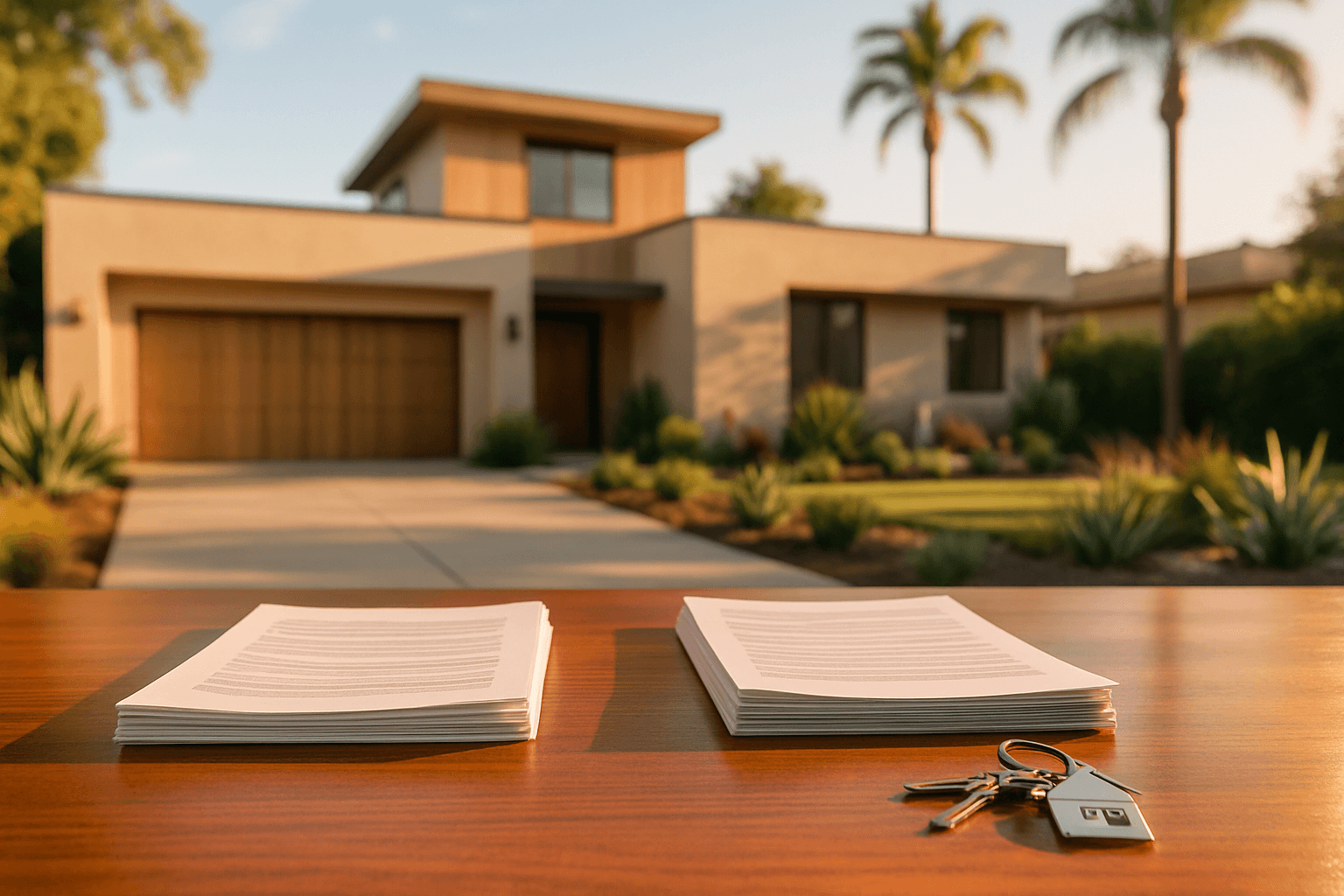
If you're in the middle of buying a home in Los Angeles — or anywhere in Southern California — you've probably heard the term earnest money deposit thrown around. Maybe your agent mentioned it, or you saw it referenced in a purchase agreement and thought, "Wait, how much is that supposed to be, and what exactly happens to it?"
You're not alone. This is one of the questions I get most often from buyers, especially first-timers who are navigating the process for the first time. So let me break it down in plain terms, because understanding earnest money can genuinely protect you — and your wallet.
What Is Earnest Money, Exactly?
Earnest money is a deposit you make when your offer on a home is accepted. It goes into an escrow account and signals to the seller that you're a serious buyer — that you're not just browsing, but genuinely committed to completing the purchase.
Think of it as a good-faith gesture. You're telling the seller, "I'm serious enough about this home to put real money on the table right now."
Once you're in escrow, that deposit is typically applied toward your down payment or closing costs at the end of the transaction. It's not an extra fee — it's part of what you were already planning to pay.
How Much Earnest Money Is Standard in California?
Here's where it gets nuanced. California doesn't set a legal requirement for a specific earnest money amount. It's negotiable, and what's considered "standard" can vary quite a bit depending on the market, the price point, and the neighborhood.
That said, in most Southern California transactions — whether we're talking about a condo in Koreatown, a single-family home in Montebello, or a property in the San Gabriel Valley — you'll commonly see earnest money deposits in the range of 1% to 3% of the purchase price. In highly competitive areas or on higher-priced properties, sellers sometimes expect more.
Here's a quick example to put it in perspective:
- On a $650,000 home, 1% would be $6,500 and 3% would be $19,500
- On an $800,000 home, 1% would be $8,000 and 3% would be $24,000
- On a $1,200,000 home, even 1% means $12,000 upfront
These are real numbers, and they can feel like a lot — especially when you're already thinking about your down payment and closing costs. That's why it's important to plan for this before you start making offers.
When Is the Earnest Money Due?
In California, the earnest money deposit is typically due within 3 business days of the seller accepting your offer. This timeline is outlined in the California Residential Purchase Agreement (RPA), which is the standard contract used in most transactions here.
Once deposited, the funds are held in escrow — usually by a title company or escrow company — until closing. Neither you nor the seller can just reach in and grab that money. It's protected in a neutral account while the deal moves forward.
Can You Get Your Earnest Money Back?
This is the question that really matters. And the honest answer is: it depends on your contingencies.
California's purchase agreement gives buyers several contingencies — protections that allow you to exit the deal and recover your deposit under specific circumstances. The most common ones include:
- Inspection contingency — If you discover something during the home inspection that's a dealbreaker, you can back out and get your deposit returned
- Appraisal contingency — If the home appraises for less than the purchase price and the parties can't reach an agreement, you may be able to walk away
- Loan contingency — If your financing falls through for a legitimate reason, your deposit is typically protected
However — and this is important — once you remove your contingencies (which buyers often do to strengthen their offers in competitive markets like Silver Lake, Burbank, or Pasadena), your deposit can be at risk if you decide to back out without a valid contractual reason.
This is exactly why you should never waive or remove contingencies without fully understanding what you're giving up. Talk through this carefully with your agent before making that decision.
What Happens If the Deal Falls Through?
If the sale falls apart through no fault of yours — say, the seller backs out or there's a title issue — your earnest money should be returned to you. If the deal falls apart because you chose to walk away after removing contingencies, the seller may have a right to keep the deposit.
In California, there's a concept called liquidated damages, which is a clause in the standard purchase agreement that limits the seller's claim to your deposit (up to a certain percentage of the purchase price) if you default. Whether this applies depends on how the contract was signed and what was agreed upon. This is something worth discussing with your real estate attorney if you have concerns — I always recommend consulting a legal professional for questions like this.
How Can You Make Your Earnest Money Work in Your Favor?
In a competitive market — and Los Angeles remains competitive in many pockets — the size and timing of your earnest money deposit can actually influence how a seller views your offer.
A larger deposit can signal financial strength and commitment. If you're competing against multiple offers in neighborhoods like Glendale, Whittier, or the Eastside of LA, a stronger earnest money deposit might help your offer stand out, even if your price isn't the highest.
On the flip side, putting in more than you're comfortable with — especially if contingencies are in play — is not something I'd ever encourage without careful consideration. More money at risk means more to lose if something goes sideways.
Here's what I always tell my buyers:
- Know your contingency timeline — Be aware of every deadline in your contract
- Don't remove contingencies casually — Understand exactly what protection you're giving up
- Have the funds ready — Don't make an offer if you can't fund the deposit within 3 business days
- Keep records of everything — Confirm receipt from escrow in writing
The Bottom Line
Earnest money is a meaningful part of the home buying process in California, and understanding how it works — before you're under contract — can save you from costly mistakes. It's not something to figure out on the fly when you're already emotionally attached to a property.
Whether you're buying your first home in the San Fernando Valley, relocating to the Inland Empire, or investing in a property in Orange County, the same fundamentals apply: know the numbers, understand your protections, and work with someone who will guide you through every step.
If you have questions about earnest money or anything else in the home buying process, I'm happy to talk it through with you — no pressure, just real information.
📞 Call or text me at 323-472-7059 🌐 Visit homenest.house to explore listings and resources across Southern California
I'm Suzanna Saharyan, a Realtor with CENTURY 21 Realty Masters, and I work with buyers across LA County, Orange County, Riverside, San Bernardino, and Ventura County. Let's make sure you go into your next offer fully informed and fully prepared.